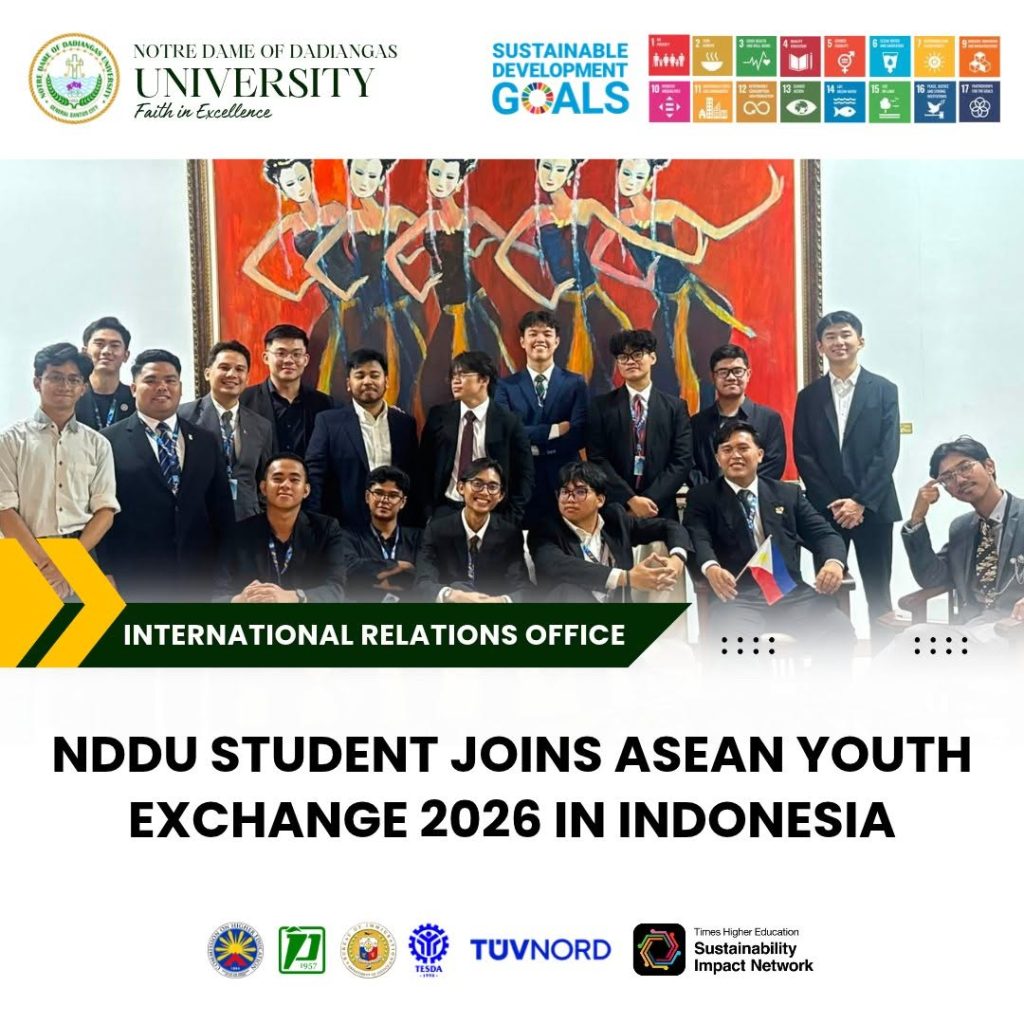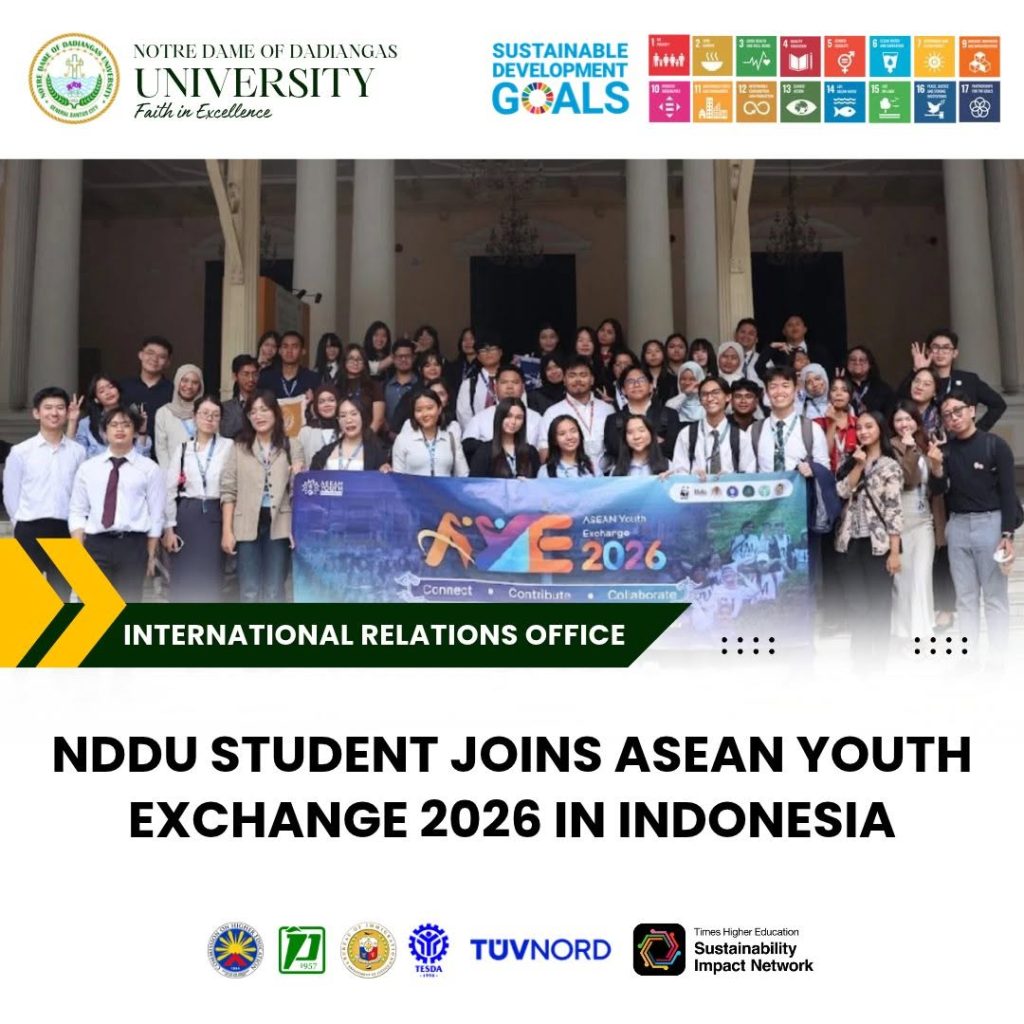
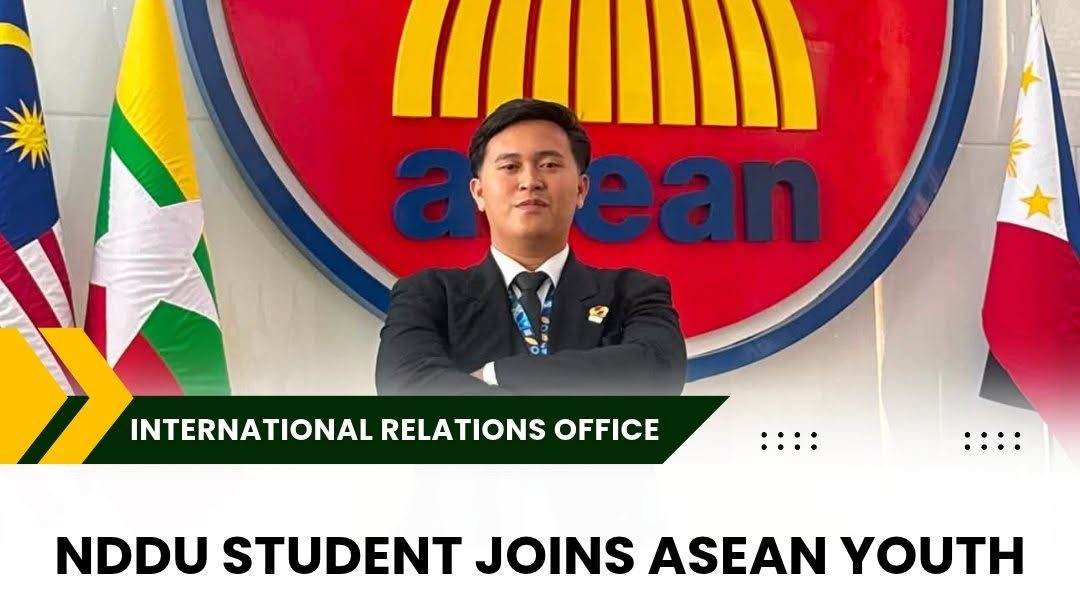
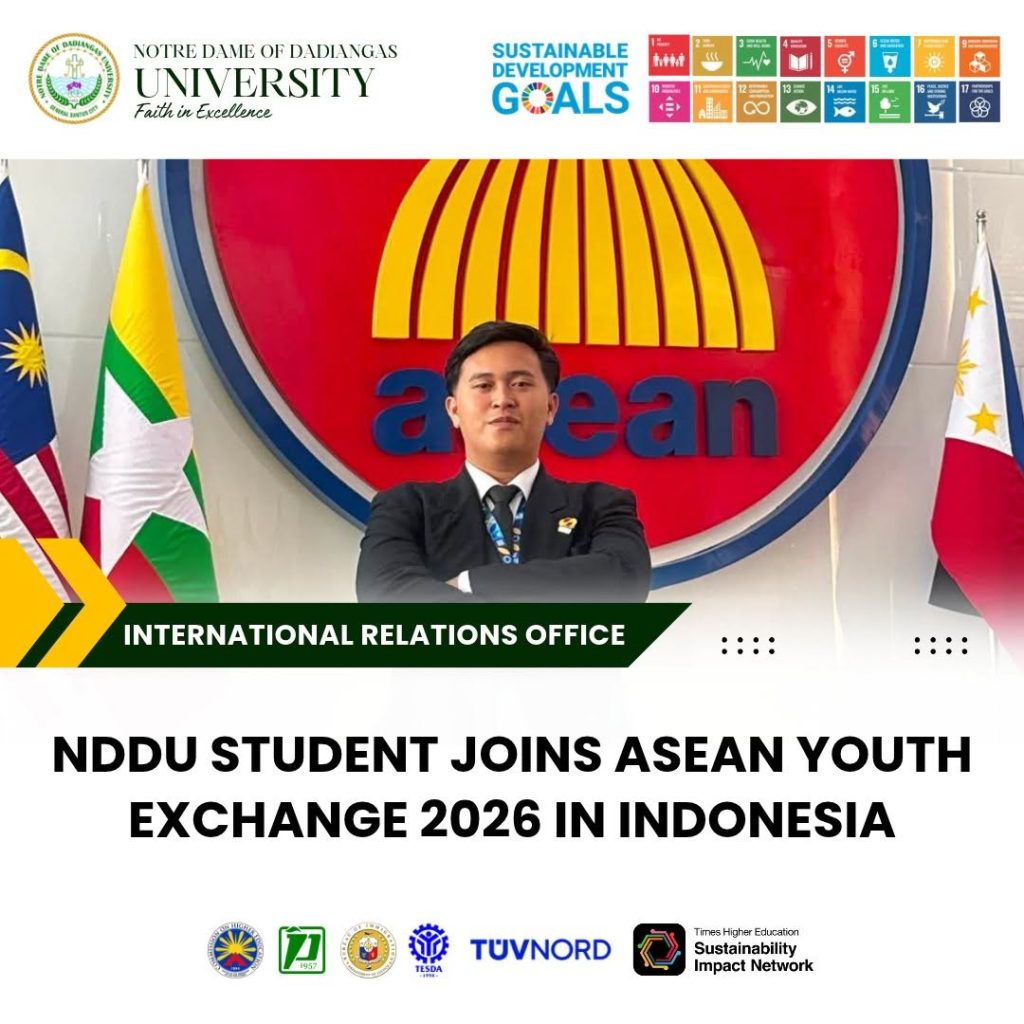
GENERAL SANTOS CITY, PHILIPPINES — Notre Dame of Dadiangas University student 𝙋𝙧𝙞𝙣𝙘𝙚 𝙉𝙞𝙘𝙤 𝙐. 𝙂𝙚𝙤𝙡𝙖𝙜𝙖, a fourth-year Bachelor of Science in Environmental Planning student, represented the Philippines in the 𝗔𝗦𝗘𝗔𝗡 𝗬𝗼𝘂𝘁𝗵 𝗘𝘅𝗰𝗵𝗮𝗻𝗴𝗲 (𝗔𝗬𝗘) 𝟮𝟬𝟮𝟲 held in Indonesia.
As a selected Philippine student delegate, Geolaga joined fellow young participants from across the ASEAN region in a series of educational, cultural, environmental, and community-based activities in Jakarta, Bogor, and Bandung. His participation provided opportunities to deepen his understanding of regional cooperation while engaging with Indonesia’s environmental practices, cultural heritage, and sustainable development initiatives.
Among the highlights of the exchange was the delegates’ visit to the ASEAN Secretariat, where they explored the ASEAN Secretariat Gallery and participated in a learning session on ASEAN’s journey, identity, and vision for a connected Southeast Asia.
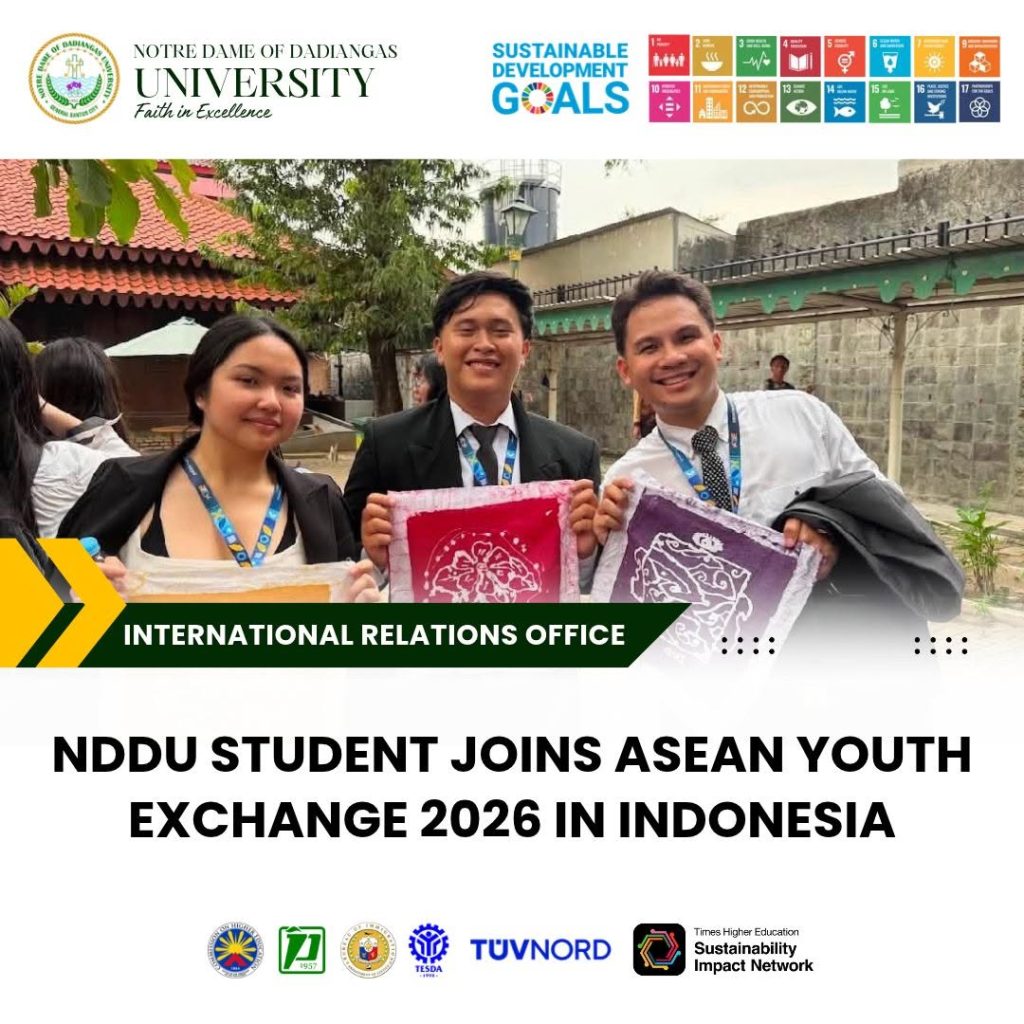
The delegates also visited the Museum Textile Jakarta, where they learned about the cultural significance of traditional Indonesian batik and participated in a hands-on batik-making activity. Beyond learning about the craft, the experience allowed delegates from different countries to build connections through shared cultural experiences.
The environmental component of the exchange brought the delegates to Kampung Cibulao in Puncak, Bogor, where they joined WWF-Indonesia as Members of Nature (MoNa) for a coffee-planting activity. They also learned about sustainable coffee farming and forest conservation practices from the local farming community.
Geolaga’s academic background in Environmental Planning further enriched his experience during the visit to the Science and Technology Park of Institut Pertanian Bogor (IPB) University. The visit exposed him to agricultural, forestry, research, entrepreneurship, and sustainable development initiatives, which he identified as valuable to his continuing academic and professional development.
In Bandung, the delegates explored Taman Hutan Raya Ir. H. Djuanda (Tahura), where they learned about the area’s historical tunnels and observed its diverse tree and plant species. They also visited Bale Garuda Kamandaka in Lembang, where they experienced Sundanese traditions, customs, arts, and stories, highlighting the role of culture in connecting communities and generations.
The final day of the exchange featured a visit to Taman Wisata Alam Angke Kapuk, also known as Jakarta Mangrove Resort. The delegates learned about the importance of mangrove ecosystems, their environmental role, and the need for their preservation. They also participated in tree planting, a speedboat activity, and natural dyeing, allowing them to engage directly with environmental and cultural learning experiences.
Beyond the formal activities, Geolaga highlighted the friendships and connections formed among the delegates throughout the exchange. Coming from different countries and backgrounds, the participants shared experiences that strengthened their appreciation of ASEAN’s diversity and interconnectedness.
For Geolaga, the ASEAN Youth Exchange 2026 was more than an international youth program. It served as an extension of his learning as an Environmental Planning student and an opportunity to connect academic knowledge with actual practices in environmental conservation, sustainable development, forestry, agriculture, and community engagement.
His participation also builds on his previous international representation of NDDU and the Philippines in the ASEAN–Japan Young Environmental Leaders Network (AJYELN), further demonstrating his continuing engagement in regional environmental and youth initiatives.
Geolaga’s participation in the ASEAN Youth Exchange 2026 also aligns with several United Nations Sustainable Development Goals (SDGs), particularly SDG 4: Quality Education, through experiential and academic learning; SDG 11: Sustainable Cities and Communities, through cultural heritage appreciation; SDG 12: Responsible Consumption and Production, through exposure to sustainable farming practices; SDG 13: Climate Action, through environmental awareness and ecosystem conservation; SDG 15: Life on Land, through forest conservation, tree planting, and biodiversity appreciation; and SDG 17: Partnerships for the Goals, through regional cooperation and cross-cultural engagement among ASEAN youth.
Through Geolaga’s participation, NDDU continues to support and promote meaningful opportunities for students to engage in international programs, develop regional networks, and bring home knowledge and experiences that contribute to their academic, professional, and personal growth.