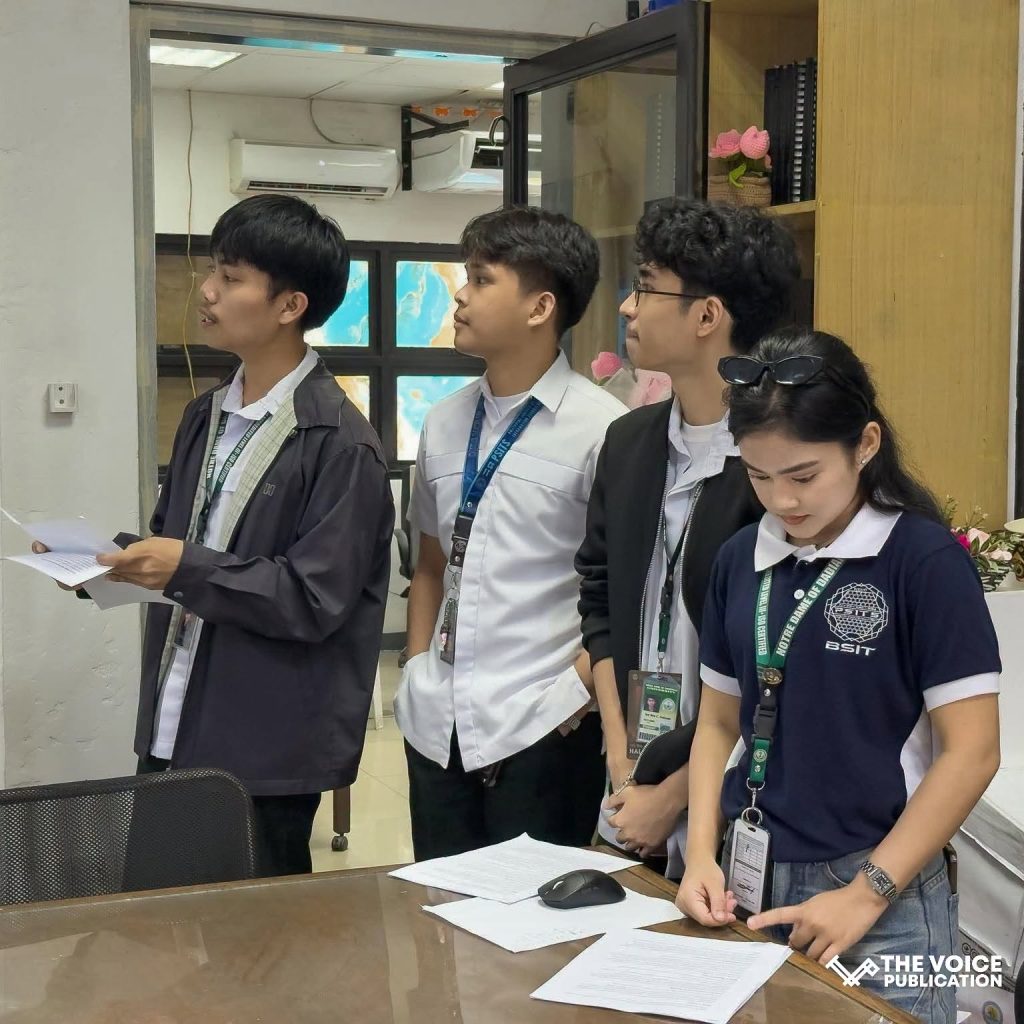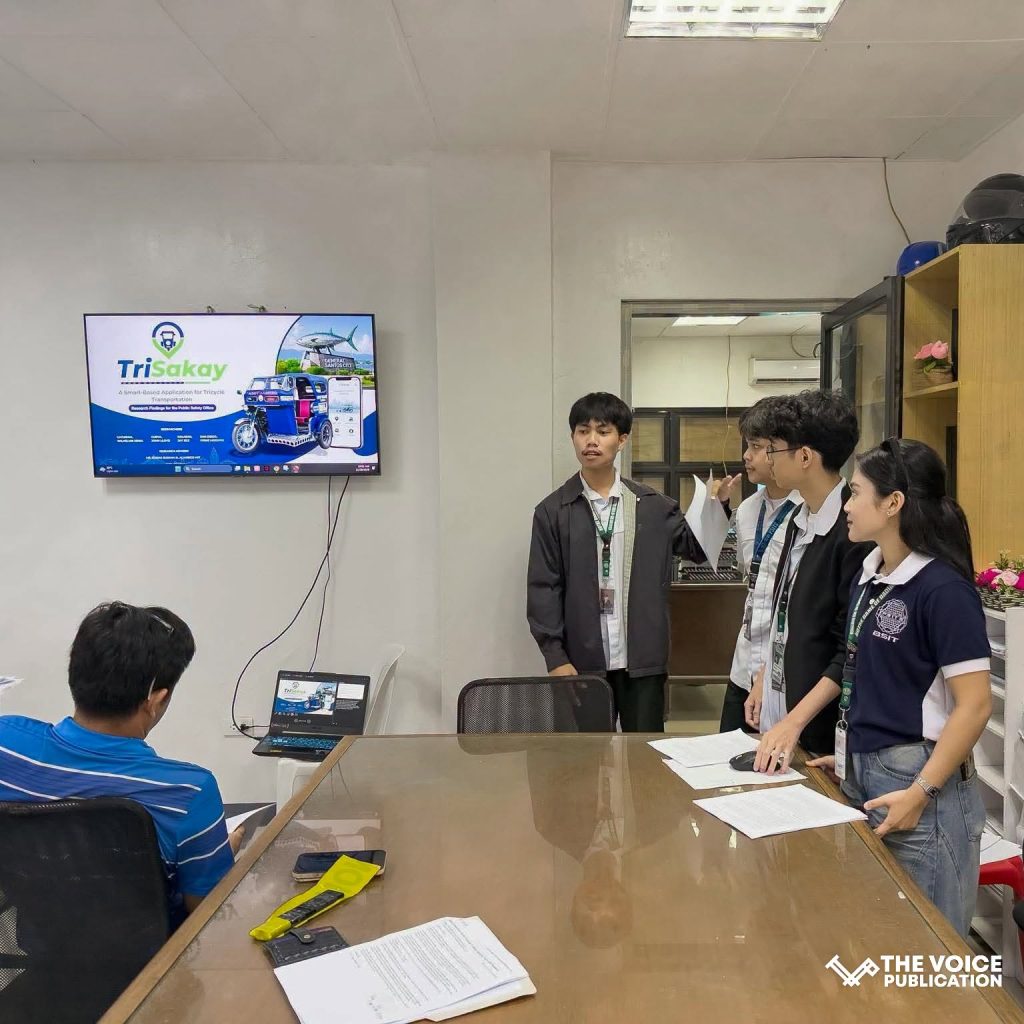

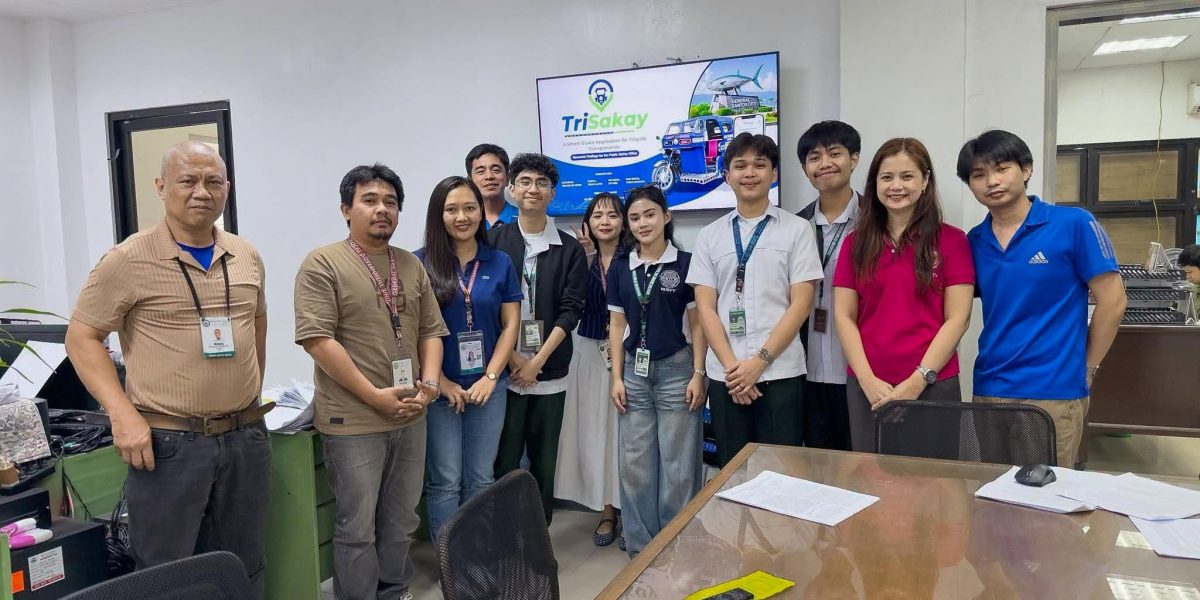
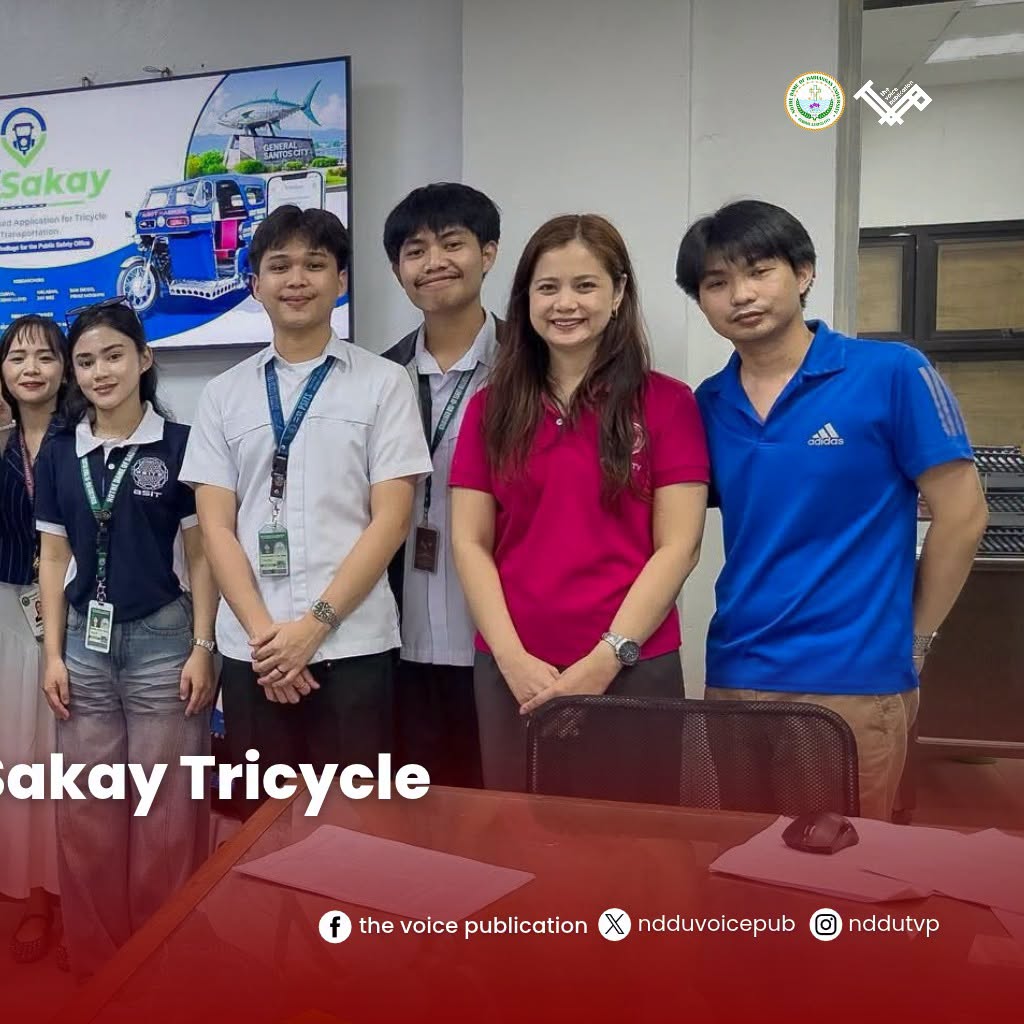
Four Information Technology seniors of Notre Dame of Dadiangas University (NDDU) presented TriSakay, a tricycle transportation system, November 20 at the Public Safety Office (PSO) in General Santos City, offering findings for local transport policy.
Jay Bee Halasan, Wilhelmn Xenia Catuiran, John Lloyd Curva and Prinz Moohyn San Diego, all fourth-year Bachelor of Science in Information Technology students of the College of Engineering, Architecture and Technology, presented their capstone project and research titled “TriSakay: A Smart-Based Application for Tricycle Transportation,” working under thesis adviser Elisha Susana Alvarico, MIT and technical adviser Jelan Roy Taladtad.
The group picked TriSakay to lessen colorum tricycles and the issues commuters and drivers experience alike, hoping its findings serve as input for the policy development and transport initiatives of the PSO.
Surveying 75 respondents in Barangay Dadiangas West from May to October 2026, the group drew data from 35 commuters, 35 registered tricycle drivers and five PSO personnel, identifying the transportation problems each group encounters.
Inconsistent fare charges among drivers topped the problems of commuters, with difficulty finding passengers during certain periods leading among drivers and difficulty tracking transportation violations ranking first among PSO personnel.
All three groups named driver and tricycle verification their top-priority feature, making it part of the system’s foundation alongside fare information and support for transportation regulations.
Working the same as a ride-hailing app built only for General Santos City, TriSakay runs as a Passenger mobile app, a Driver mobile app and a web-based portal for the PSO.
Commuters see the estimated fare before booking, computed from City Ordinance No. 08, Series of 2023, along with the driver’s PSO-verified badge and the tricycle’s plate number, with PSO personnel using the portal to verify drivers and tricycles, monitor active units on a live map and handle complaints.User acceptance testing yielded composite weighted means of 4.80 from commuters, 4.37 from drivers and 4.73 from PSO personnel, placing acceptance of the system at Very High across all three groups.
The study recommends a pilot deployment of the system, measuring its actual effect on fare compliance, passenger waiting time and complaint resolution time.